When you’re facing a kitchen remodel, creating a functional temporary kitchen can seem challenging. You need to assess your space carefully, ensuring it’s well-ventilated and close to plumbing and electrical outlets. Choosing the right appliances is vital, along with organizing your cooking supplies efficiently. By planning ahead, you can maintain a semblance of normalcy during the chaos. Let’s explore how to set up your temporary kitchen effectively, starting with the essentials.
Key Takeaways
- Measure and choose a well-ventilated area with access to plumbing and electrical outlets for your temporary kitchen setup.
- Use essential appliances like a microwave, toaster oven, and hot plate to meet cooking needs without a full kitchen.
- Organize cooking supplies in labeled bins and ensure frequently used items are easily accessible to streamline meal preparation.
- Plan simple, quick meals in advance, incorporating no-cook options and batch cooking to save time during the remodel.
- Maintain cleanliness and hygiene by regularly sanitizing surfaces and monitoring for pests to ensure a safe cooking environment.
Assessing Your Space
Before you immerse yourself in creating your temporary kitchen, it’s essential to assess your space carefully. Start by measuring the area you plan to use, noting any obstacles like doors or windows.
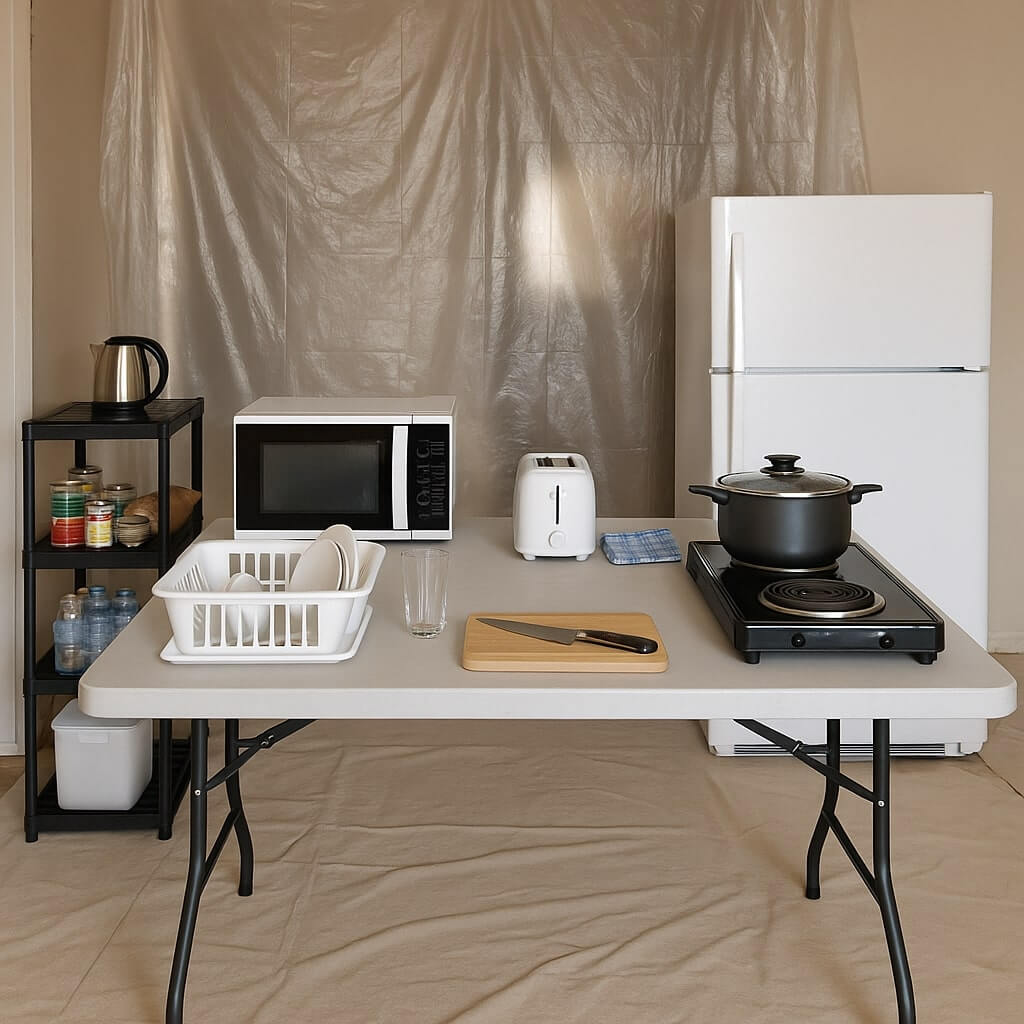
Consider your kitchen layout; you want a flow that allows easy movement between cooking, cleaning, and food prep zones. Think about space optimization—maximize counter space by using folding tables or carts.
Organize essentials within arm’s reach to streamline your cooking process. Finally, guarantee you have adequate lighting for safety and efficiency.
Essential Cooking Appliances
Once you’ve assessed your space, it’s time to think about the appliances that will make your temporary kitchen functional.
Consider these essential appliances:
- Compact microwave: A great microwave alternative for quick meals.
- Hot plate: Perfect for stovetop cooking without a full range.
- Toaster oven: Versatile for baking, broiling, or toasting.
- Blender options: Choose a personal blender for smoothies or soups.
- Electric kettle: Ideal for boiling water for tea or instant meals.
These appliances will help you maintain your cooking routine while your kitchen’s under construction, ensuring you can still whip up delicious meals.
Setting Up a Food Preparation Area
To set up an effective food preparation area, start by choosing a location that’s spacious and well-lit.
You’ll need essential equipment like cutting boards, knives, and mixing bowls to streamline your process.
Once you have these items, organize your supplies efficiently to minimize clutter and maximize productivity.
Choose Ideal Location
Choosing the ideal location for your temporary kitchen is essential for efficient food preparation.
Consider the following factors to optimize your kitchen layout and guarantee space accessibility:
- Proximity to Water Source: Make sure you’re near a sink for easy washing.
- Electrical Outlets: Position your kitchen close to outlets for appliances.
- Ventilation: Ensure good airflow to prevent cooking odors from lingering.
- Traffic Flow: Avoid high-traffic areas to minimize interruptions during meal prep.
- Storage Solutions: Choose a space that allows for easy access to pots, pans, and ingredients.
Essential Equipment Needed
Setting up an efficient food preparation area requires the right equipment to streamline your cooking process.
Start with essential cooking utensils like a sharp knife, cutting board, and measuring cups. Include kitchen gadgets such as a blender, can opener, and mixing bowls to enhance functionality.
A portable induction cooktop can serve as your primary cooking surface, while a microwave provides quick reheating options.
Don’t forget a sturdy, collapsible table for additional workspace. Finally, keep a set of essential pots and pans handy to cover various cooking needs.
With these tools, you’ll maintain a smooth workflow even during your remodel.
Organize Supplies Efficiently
Once you’ve gathered the necessary equipment, the next step is organizing your supplies to maximize efficiency in your temporary kitchen.
Start with a clear supply inventory and utilize your kitchen storage wisely. Here are some tips:
- Group similar items together (e.g., utensils, cookware, and food).
- Use clear bins or labels for easy identification.
- Keep frequently used items within reach.
- Designate a prep area to avoid clutter.
- Regularly reassess your organization to adapt to changing needs.
Organizing Your Cooking Supplies
Organizing your cooking supplies efficiently can make a significant difference in your temporary kitchen setup.
Start by maximizing kitchen storage options. Use clear bins or baskets to group similar items, like utensils, pots, and pans. Label each container for quick access, ensuring you know where everything is located.
Consider using vertical space by installing shelves or hooks for frequently used tools. For food items, employ food labeling to mark expiration dates and contents, preventing any mix-ups.
Keep your most essential supplies within easy reach to streamline cooking. With a well-organized space, you’ll find meal prep much more manageable during your remodel.
Creating a Dining Space
To create a functional dining space, start by choosing a suitable location that’s easily accessible and comfortable for everyone.
Next, utilize portable furniture like folding tables and chairs to maximize flexibility.
Finally, set up basic essentials such as plates, utensils, and napkins to guarantee a smooth dining experience.
Choose a Suitable Location
Choosing the right spot for your temporary kitchen can greatly enhance your cooking and dining experience.
To create an effective dining space, consider the following:
- Proximity to the main kitchen area: Keep the temporary kitchen nearby for easy access to supplies.
- Natural light: Select a location with good lighting to make cooking enjoyable.
- Traffic flow: Guarantee there’s enough space around the dining area to avoid congestion.
- Stability: Choose a flat surface for your dining setup to prevent accidents.
- Ventilation: Ensure proper airflow to keep the area comfortable while cooking.
These factors will improve your kitchen layout and overall functionality.
Utilize Portable Furniture
Once you’ve settled on a suitable location for your temporary kitchen, the next step is to incorporate portable furniture that maximizes your space and functionality.
Consider using portable countertops that can easily be moved and adjusted, providing extra prep space when needed. Pair these countertops with foldable chairs, which can be tucked away when not in use, ensuring your dining area remains flexible.
This setup allows you to create a cozy dining space without overwhelming your temporary kitchen. By selecting lightweight, versatile furniture, you’ll maintain an efficient flow, making meals enjoyable even amid a remodel.
Set Up Basic Essentials
Creating a comfortable dining space in your temporary kitchen starts with setting up the basic essentials.
You’ll want to guarantee you have everything needed for meal prep and dining. Here’s a quick list to help you out:
- A sturdy table for dining
- Basic cooking tools like pots and pans
- Necessary utensils, including knives and spoons
- Plates, bowls, and glasses
- A small storage solution for food items
Meal Planning and Preparation Tips
While setting up a temporary kitchen can feel challenging, effective meal planning and preparation can streamline the process and make cooking easier.
Start by organizing your meal prep for the week ahead. Choose simple recipes that require minimal equipment and use similar ingredients to cut down on grocery shopping.
Organize your weekly meal prep with simple recipes and versatile ingredients to simplify grocery shopping and cooking.
Create a shopping list focusing on versatile items, like grains, proteins, and vegetables. Batch cook whenever possible, and store meals in easy-to-reheat containers.
Prepare snacks in advance to avoid unhealthy choices. Finally, consider using a slow cooker or Instant Pot for quick, hassle-free meals, maximizing efficiency during your remodel.
Maintaining Cleanliness and Safety
To guarantee your temporary kitchen remains a safe and clean space, prioritize hygiene as you cook and prepare meals.
Establish a cleaning schedule and follow safety protocols to protect yourself and your family. Here are some practical tips:
- Wipe down surfaces before and after use.
- Keep raw and cooked foods separate to avoid cross-contamination.
- Use designated utensils for different food types.
- Regularly take out trash to prevent odors and pests.
- Verify all appliances are unplugged when not in use.
Conclusion
Creating a functional temporary kitchen during your remodel doesn’t have to be overwhelming. By carefully evaluating your space, equipping it with essential appliances, and organizing your cooking supplies, you can maintain a practical cooking environment. Don’t forget to set up a cozy dining area and plan easy meals to keep things simple. With a focus on cleanliness and safety, you can navigate your renovation smoothly and enjoy home-cooked meals throughout the process.