When planning a kitchen remodel in the Bay Area, you’ll quickly realize that costs can fluctuate considerably based on various factors. Understanding how kitchen size, layout, materials, and labor impact your budget is vital. You’ll also need to take into account permitting and local regulations, which can further complicate your project. As you navigate these complexities, it’s important to identify which elements will affect your plans the most. Let’s explore these key factors in detail.
Key Takeaways
- Kitchen size and layout significantly influence cabinetry choices, appliance placements, and overall remodel costs.
- Material selection impacts aesthetics and expenses, with high-end options like quartz increasing costs significantly.
- Labor costs in the Bay Area are higher than national averages, influenced by project complexity and skilled tradespeople.
- Permitting and local regulations can add to project costs and require careful navigation to avoid delays.
- A well-defined project timeline and regular communication with contractors can help manage milestones and mitigate unexpected costs.
Kitchen Size and Layout
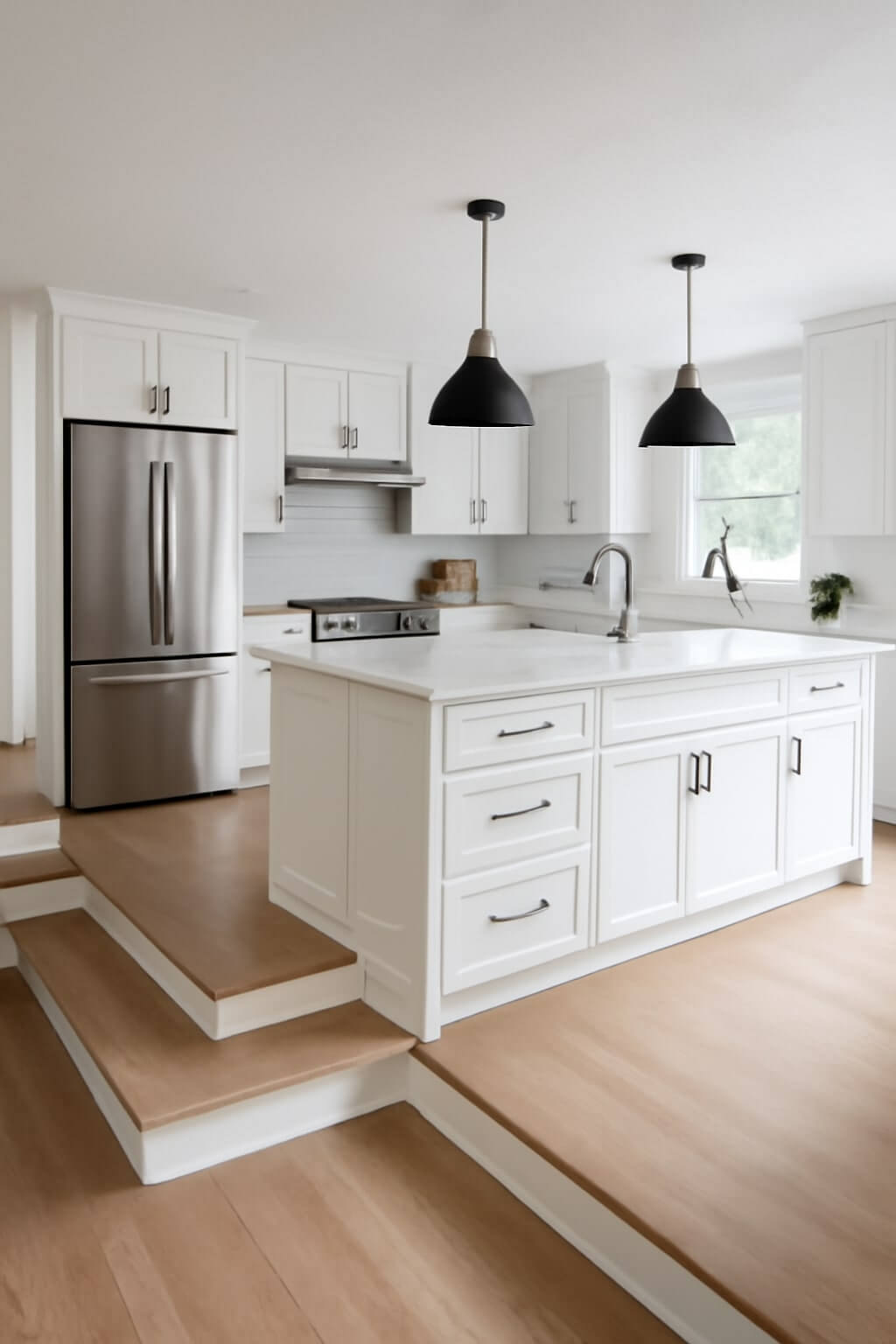
When you consider a kitchen remodel in the Bay Area, the size and layout of your kitchen play an essential role in determining costs and functionality.
Your kitchen dimensions influence everything from cabinetry choices to appliance placements, affecting both aesthetics and usability. An efficient layout maximizes space, ensuring that the workflow between cooking, cleaning, and storage is seamless.
You’ll want to evaluate how your current layout supports daily activities and whether it can be improved. By prioritizing layout efficiency, you not only enhance your cooking experience but also potentially increase your home’s value, making smart choices a worthwhile investment.
Material Choices
Evaluating your kitchen’s size and layout sets the stage for making informed material choices that impact both aesthetics and functionality.
Opting for eco-friendly materials, like bamboo or recycled countertops, not only contributes to sustainability but can also enhance your home’s value.
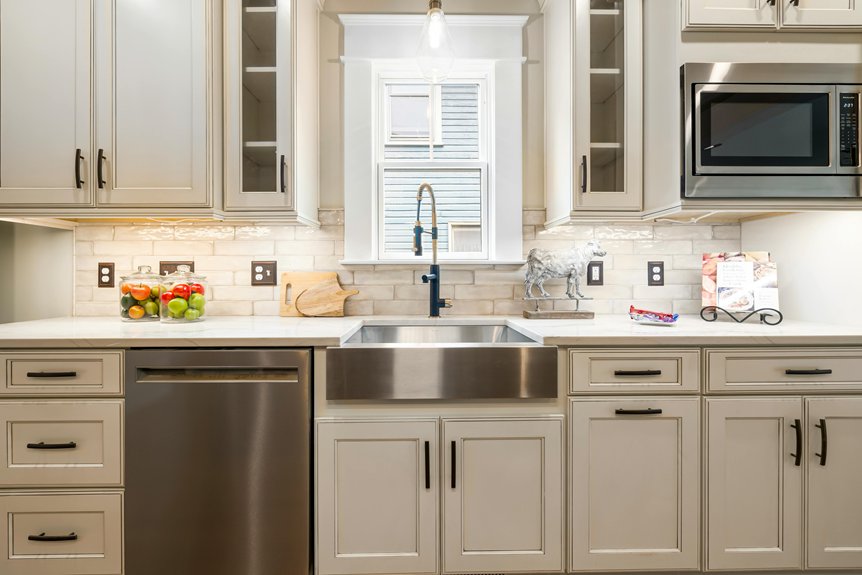
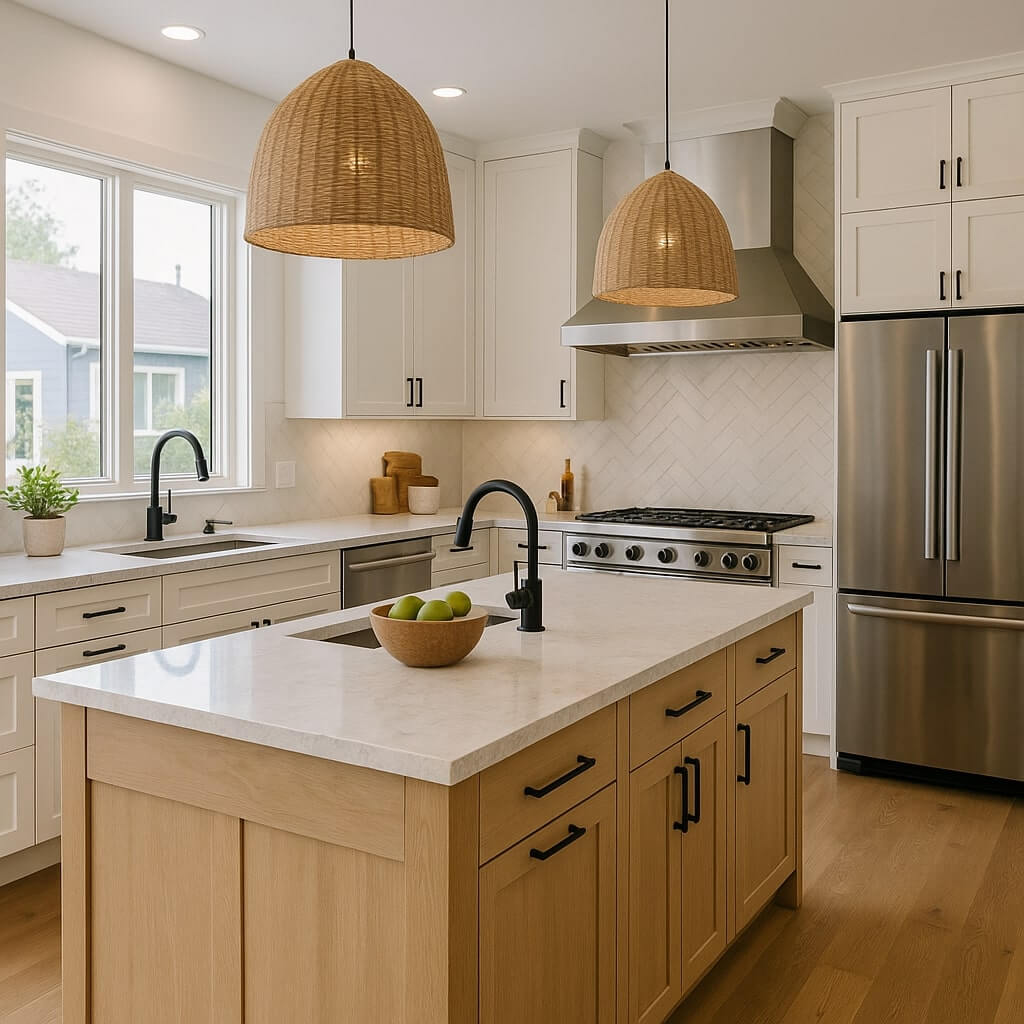
Consider high-end finishes, such as quartz or custom cabinetry, to elevate your kitchen’s appearance while ensuring durability.
Choosing the right materials involves balancing your budget with your design vision.
Think about how each selection aligns with your lifestyle and long-term goals, as these elements will notably influence the overall cost and satisfaction of your kitchen remodel in the Bay Area.
Labor Costs
Labor costs play an essential role in your kitchen remodel budget, often accounting for a considerable portion of the overall expenses.
Understanding wage fluctuations and the demand for skilled trades can help you anticipate costs. Here are three key factors to take into account:
- Skill Level: Hiring experienced professionals typically incurs higher rates, reflecting their expertise.
- Project Timeline: Longer projects may increase labor costs due to extended overhead expenses.
- Local Market Rates: Labor costs can vary markedly based on your location within the Bay Area, so it’s vital to research local rates before committing.
Design Complexity
As you immerse yourself in your kitchen remodel, the complexity of your design choices can greatly impact your overall budget.
Choosing intricate design styles, like modern or farmhouse, may require custom cabinetry or unique materials, driving up costs. Additionally, your aesthetic preferences play a significant role; opting for high-end finishes or elaborate layouts will necessitate skilled labor and potentially lengthy timelines.
Permitting and Regulations
Before you get too deep into your kitchen remodel, it’s important to contemplate the permitting and regulations that govern construction projects in the Bay Area.
Understanding permit types and staying updated on regulation updates can save you time and money.
- Building Permits: Required for structural changes, these guarantee safety and compliance.
- Electrical Permits: Necessary for any electrical modifications, making sure your updates meet safety standards.
- Plumbing Permits: Essential for plumbing work, these prevent future issues and code violations.
Navigating these requirements is vital for a smooth remodel process and avoiding costly delays.
Appliance Selection
When selecting appliances for your kitchen remodel, it’s crucial to contemplate how they’ll fit your lifestyle and design goals. Prioritize energy efficiency to save on long-term costs, and consider brand reputation for reliability and performance. Researching different brands can help you find appliances that align with your culinary habits and aesthetic preferences.
| Appliance Type | Energy Efficiency Rating |
|---|---|
| Refrigerator | ENERGY STAR Certified |
| Dishwasher | ENERGY STAR Certified |
| Oven | Energy Efficient |
| Microwave | Energy Efficient |
| Range | ENERGY STAR Certified |
Invest in quality appliances; they can greatly impact your kitchen’s functionality.
Plumbing and Electrical Work
While planning your kitchen remodel, addressing plumbing and electrical work is essential to guarantee safety and functionality. Ignoring these aspects can lead to costly issues down the line.
Here are three key considerations to keep in mind:
- Plumbing upgrades: Ascertain your pipes and fixtures meet modern standards to prevent leaks and improve efficiency.
- Electrical inspections: Have a professional check your wiring to handle new appliances and avoid hazards.
- Permits: Don’t overlook the need for permits, as they can impact your remodel timeline and budget.
Investing in these areas now can save you money and headaches later.
Geographic Location
The Bay Area’s unique geographic location greatly influences kitchen remodel costs, making it essential to factor in local market conditions. Urban density in cities like San Francisco drives demand, often leading to higher labor and material costs. Additionally, regional trends can shift based on nearby developments and housing market fluctuations. Understanding these factors helps you budget effectively for your remodel.
| Area | Average Cost per Sq. Ft. | Urban Density Level |
|---|---|---|
| San Francisco | $500 | High |
| Oakland | $400 | Medium |
| San Jose | $350 | Medium |
| Marin County | $450 | Low |
Timing and Seasonality
Although kitchen remodels can be undertaken year-round, timing and seasonality greatly impact both costs and project timelines.
Understanding seasonal trends and holiday timing can help you save money and streamline your project. Consider these factors:
- Off-Peak Seasons: Scheduling your remodel in late winter or early spring often reduces labor costs and material prices.
- Holiday Timing: Avoid starting a remodel right before major holidays, as demand surges and delays become common.
- Weather Considerations: Bay Area weather can affect outdoor work; planning during milder months can prevent unexpected costs and delays.
Being strategic with timing can lead to a smoother remodel experience.
Project Management and Overhead Costs
When planning your kitchen remodel, understanding labor costs, permitting fees, and project timelines is essential to managing your budget effectively.
You’ll find that labor breakdowns can vary considerably based on the complexity of your design and local wage rates.
Additionally, factoring in permitting and inspection costs early can help you avoid surprises that could derail your project timeline.
Labor Costs Breakdown
While maneuvering your kitchen remodel in the Bay Area, understanding the breakdown of labor costs—particularly project management and overhead—can greatly impact your budget.
Here are three key factors to evaluate:
- Labor Market Trends: Stay informed about current labor rates, as they fluctuate based on demand.
- Contractor Negotiations: Effective negotiation with contractors can lead to cost savings, so don’t hesitate to discuss terms.
- Overhead Expenses: Factor in costs related to supervision, insurance, and tools, as they considerably contribute to the overall labor cost.
Permitting and Inspection Fees
Steering through the permitting and inspection fees is essential to your kitchen remodel budget, as these costs can add up quickly if you’re not prepared.
The permitting process in the Bay Area often involves various forms and approvals, which can lead to unexpected delays and expenses. You’ll need to familiarize yourself with local laws and guarantee your plans meet inspection requirements.
It’s wise to budget for these fees early on, as underestimating them can derail your project. Consider consulting with a contractor familiar with the area to navigate this complex landscape effectively and avoid costly surprises later.
Project Timeline Considerations
Understanding the timeline of your kitchen remodel is just as important as budgeting for permits and inspections.
A well-defined schedule helps you manage project milestones and avoid costly scheduling conflicts.
Here are three key considerations:
- Set realistic milestones: Break the project into phases, like design, demolition, and installation.
- Communicate with your contractor: Regular check-ins guarantee everyone’s on the same page, preventing delays.
- Factor in lead times: Appliances and materials can take longer to arrive than expected, so plan ahead.
Conclusion
To summarize, understanding the key factors influencing kitchen remodel costs in the Bay Area is essential for making informed decisions. By carefully considering your kitchen’s size and layout, material choices, and labor costs, you can create a budget that aligns with your vision. Don’t overlook the complexities of permitting, plumbing, and electrical work, as well as the impact of timing and geography. With thoughtful planning and management, you can achieve your dream kitchen without breaking the bank.